
Soil Science and Agricultural Chemistry Department
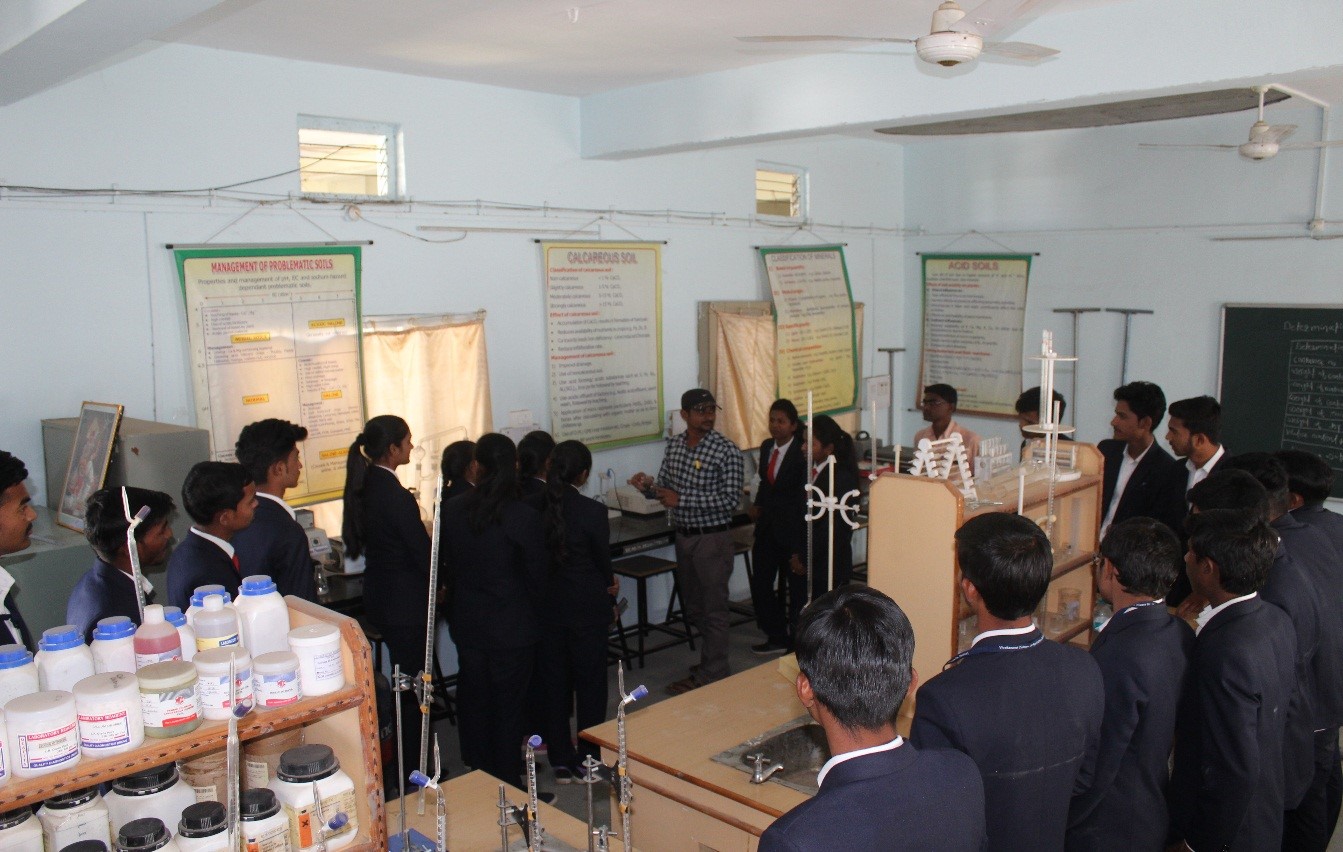
This section focuses on improving soil health and crop productivity. It trains students in soil analysis, nutrient management, fertilizers, and sustainable farming practices. The section highlights soil conservation, organic farming, and eco-friendly technologies, preparing students to support farmers and agribusiness with scientific solutions.
Soil Formation and Classification: Understanding how soils are formed through natural processes and how they are classified based on texture, structure, fertility, and mineral content.
Physical Properties of Soil: Studying soil texture, structure, porosity, water-holding capacity, bulk density, and aeration – all of which affect root development, water availability, and microbial activity.
Chemical Properties of Soil: Analyzing soil pH, electrical conductivity (EC), cation exchangecapacity (CEC), organic matter content, and nutrient availability to ensure proper nutrient uptake by crops.
Soil Fertility and Plant Nutrition: Assessing the nutrient status of soils and the specific nutrient requirements of crops. It involves the judicious use of fertilizers, manures, compost, and bio fertilizers to optimize plant nutrition.
Soil Testing and Fertilizer Recommendations: Using laboratory analysis to determine nutrient deficiencies or toxicities in soil, and giving crop- and soil-specific fertilizer recommendations to farmers.
Problem Soil Management: Developing and applying strategies to reclaim and improve problematic soils such as: Acidic soils – managed with liming materials. Saline and sodic soils – managed through leaching, gypsum application, and use of salt-tolerant crops. Nutrient-depleted
soils – improved by organic amendments and balanced fertilization.
Soil and Water Conservation: Implementing conservation practices like contour farming, terracing, mulching, and cover cropping to reduce soil erosion and degradation, and to preserve soil health for long-term productivity.
Soil Organic Matter and Microbial Activity: Enhancing the biological fertility of soil by increasing organic carbon and supporting beneficial soil organisms that contribute to nutrient cycling and soil structure.
Practical Skills: Students develop practical skills in soil analysis, using tools for soil mapping, and making informed land management decisions.
Potential Career Paths: Soil scientists, Soil testing and fertilizer specialists, Environmental consultants focused on soil remediation and pollution, Land use planners, and Agricultural extension agents and researchers.
